


Buying a house comes with a whole slew of other costs, including closing fees.
Buying a home involves more than saving for a down payment. Buyers also need to account for closing costs, the collection of expenses associated with getting a mortgage, completing the transaction, and transferring ownership of the property.
So, what are closing costs? They are the fees and prepaid expenses you pay at or around closing, separate from your down payment. The exact amount varies based on the purchase price, loan type, location, lender, property, and terms of the transaction. Understanding these costs can help you plan your cash needs and avoid surprises.
HOW MUCH ARE CLOSING COSTS?
A common rule of thumb is that average closing costs may fall between 2% and 5% of the home’s purchase price, although actual costs can fall outside that range.
On a $400,000 home, that estimate would put closing costs around $8,000 to $20,000. Your actual costs may be lower or higher depending on the mortgage, local taxes and fees, insurance, title services, and negotiated seller contributions.
It’s also important to distinguish closing costs from cash to close, the total amount you may need to bring to the transaction. Cash to close can include your down payment, closing costs, prepaid expenses, credits, deposits already paid, and other adjustments.
WHAT DO CLOSING COSTS INCLUDE?

Looking to buy a house? Make it a point to know about all the costs involved, not just your initial deposit.
Closing costs aren’t a single fee. They are a collection of charges from lenders, title companies, attorneys, government agencies, insurers, and other service providers. Some cover the mortgage and purchase itself, while others cover expenses that come due after you become the owner.
Mortgage and lender fees
Mortgage-related costs cover the work involved in evaluating, processing, and funding your loan, with specific charges varying by lender and loan type. Here are the most common:
- Loan origination fees: Your lender may charge fees for originating, processing, underwriting, and preparing your mortgage. The amount varies by lender and loan.
- Credit report fee: Your lender may charge a fee for obtaining your credit report as part of the mortgage application process.
- Discount points: Points are optional upfront payments that can reduce your mortgage interest rate. Whether they make financial sense depends on the upfront cost, rate reduction, how long you expect to keep the mortgage, and your available cash.
- Other lender charges: Depending on the loan, you may see fees for underwriting, processing, document preparation, or other mortgage-related services.
👉 WHAT YOU CAN DO: Ask each lender to explain any fees you do not recognize and whether they are required, negotiable, or tied to a specific loan option.
Appraisal, inspection, and title costs
Other expenses relate to evaluating the property and confirming that ownership can be transferred properly. Some are paid before closing, while others appear among your final transaction costs. These are:
- Appraisal: A lender generally requires an appraisal to establish an independent opinion of the property’s value. This helps the lender evaluate whether the property provides sufficient collateral for the loan.
- Home inspection: An inspection gives the buyer information about the property’s condition, including potential issues with its structure, roof, electrical systems, plumbing, and other components. Because it typically takes place before closing, it isn’t technically a closing cost in every transaction, but it should still be included in your upfront buying budget.
- Title search and title insurance: A title search helps identify ownership issues, liens, or other claims affecting the property. Title insurance can protect against certain covered problems that existed before the policy was issued. Depending on the location and transaction, the buyer, seller, or lender may be responsible for different title-related expenses.
- Attorney or settlement fees: Some states and transactions involve attorneys or settlement professionals to prepare documents, oversee the closing, or handle the legal transfer of the property.
👉 WHAT YOU CAN DO: Before choosing providers, confirm which services are covered by your purchase agreement, lender, or local requirements so you know what needs to be arranged and paid for separately.
Prepaid expenses and escrow
Some money collected at closing isn’t technically a fee for completing the transaction. Instead, it covers expenses that will come due after you become the owner, such as:
- Prepaid property taxes: Depending on the closing date and local tax schedule, you may need to prepay a portion of your property taxes.
- Homeowners insurance: If required by your lender, you may need to pay the first premium upfront.
- Prepaid interest: Mortgage interest may accrue between the closing date and the beginning of your first full payment period.
- Initial escrow deposit: If your mortgage includes escrow, the lender may collect money for future property taxes and insurance.
👉 YOUR NEXT STEP: Keep some flexibility in your closing budget for adjustments to taxes, insurance, or prepaid interest, since these amounts can change based on your closing date and the property’s payment schedule.
WHO PAYS CLOSING COSTS?
Buyers and sellers can each have transaction-related expenses, and responsibility for specific costs depends on the purchase agreement, local customs, and applicable laws.
Buyers generally have costs associated with their mortgage and purchase, but they may be able to negotiate for the seller to contribute toward certain expenses. These are commonly called seller concessions or seller credits.
The amount a seller can contribute isn’t unlimited. Restrictions can apply based on the mortgage type, down payment, occupancy, and other factors. Seller credits also have to be reflected appropriately in the purchase and closing documents.
A seller credit can reduce the amount you need to bring to closing, but it isn’t the same as receiving cash back. The credit is generally applied to eligible closing expenses under the terms permitted for the transaction.
HOW DO YOU ESTIMATE YOUR CLOSING COSTS?
Your lender’s Loan Estimate (LE) is one of the most useful tools for understanding what your mortgage and closing may cost.
After you submit a mortgage application, the lender generally must provide a Loan Estimate within three business days. It provides information about the loan terms, projected monthly payment, and estimated closing costs.
Review the lender’s fees, estimated services, prepaid expenses, and other charges rather than focusing only on the interest rate. Comparing Loan Estimates can also show where lenders differ.
Before closing, you’ll receive a Closing Disclosure (CD) with the final details of the mortgage and transaction. Compare it with your Loan Estimate and ask about any unexpected changes before signing.
CAN YOU LOWER YOUR CLOSING COSTS?
You may have several ways to reduce your upfront expenses, depending on your lender, loan type, purchase agreement, and transaction.
These include the following:
- Compare lenders: Look at rates, lender fees, credits, and other loan costs together.
- Shop for eligible services: Where permitted, compare providers rather than automatically accepting the first option.
- Ask about seller credits: A seller may agree to contribute toward eligible closing expenses, subject to applicable limits.
- Ask about lender credits: Some lenders offer credits in exchange for a higher interest rate. Compare the upfront savings with the additional interest you could pay over time.
- Consider discount points carefully: Paying points can lower your rate but requires more cash upfront. Consider how long you expect to keep the mortgage.
- Understand no-closing-cost loans: These generally don’t eliminate the underlying expenses. Costs may be offset by a higher interest rate or incorporated into the loan.
- Consider your closing date: Closing near the end of the month may reduce prepaid mortgage interest, but it doesn’t necessarily make the transaction less expensive overall.
👉 YOUR NEXT STEP: Ask your lender for a side-by-side comparison of your available loan options, including the rate, upfront costs, credits, and estimated long-term expense. This gives you a clearer basis for deciding whether an upfront saving is actually worthwhile.
FREQUENTLY ASKED QUESTIONS
What are closing costs?
Closing costs are the fees and prepaid expenses associated with completing a home purchase and mortgage. They are separate from the down payment but contribute to the total amount you may need to bring to closing.
How much are closing costs on a typical single-family home?
The average closing costs for a single-family property is 2% to 5% of the purchase price, although the actual amount can vary considerably between transactions. Your Loan Estimate provides a more specific projection based on your mortgage and purchase.
Can you negotiate closing costs?
Some costs can be negotiated. Buyers may also negotiate seller credits or compare lenders to find different combinations of rates, fees, and credits.
Can closing costs for buyers be rolled into a mortgage?
Closing costs rolled into a mortgage will depend on the loan and the specific costs involved. Some expenses may be financed or offset through lender credits, while others must be paid upfront. Ask your lender what options apply.
When do you pay closing costs?
Most closing costs for buyers are paid at closing, although some expenses, such as inspections, may be paid earlier. Your Closing Disclosure will show the amount you are expected to bring to closing.
UNDERSTAND THE FULL COST OF BUYING WITH FREDY RODRIGUEZ REAL ESTATE
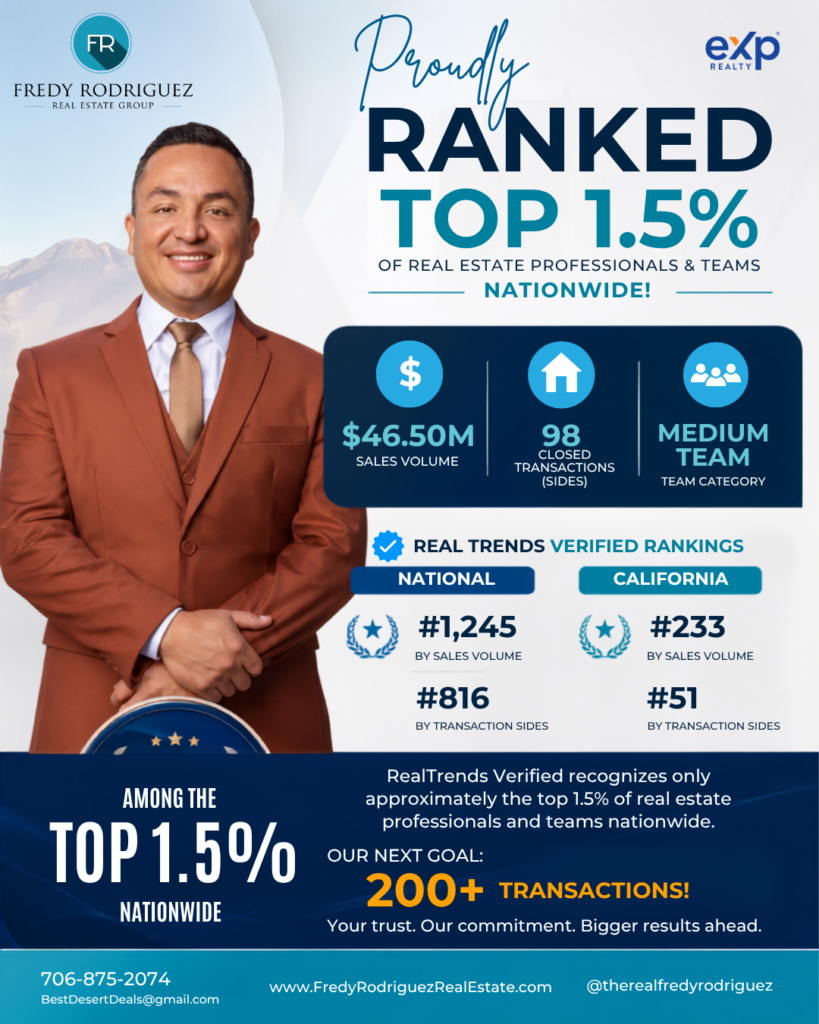
Top 1.5% Nationwide! 🏆 We’re officially RealTrends Verified among the top real estate professionals in the country. This achievement belongs to our amazing clients and the community who trust us with their home journeys every day. Thank you for your continued support!
A home purchase involves more than the listing price. Knowing what to expect at closing can help you plan your budget and avoid surprises along the way.
At Fredy Rodriguez Real Estate Group, we combine Coachella Valley market knowledge with hands-on guidance throughout the buying process, from evaluating homes to understanding the costs involved.
Ready to start your home search? Give us a call at 760.875.2074 or send a message to connect with Fredy and the team.