If you’re thinking about buying a home, you’ve probably heard someone say, “Get pre-approved first.” But what exactly does that mean?
A mortgage pre-approval is one of the most important first steps in the homebuying process. It gives you a better idea of how much you may be able to borrow, helps you understand your estimated monthly payment, and prepares you to make a strong offer when you find the right home.
At a Glance
- Know Your Power: Discover your true purchasing budget before falling in love with a property.
- Win in Competition: Sellers take pre-approved buyers significantly more seriously.
- Prevent Delays: Pre-approval uncovers and solves potential financial hiccups early.
Many buyers want to start by looking at properties—that’s the exciting part! However, getting pre-approved before you begin seriously shopping can save you time and help you focus on homes that fit your financial situation. Let’s break down how a mortgage pre-approval works, what lenders look at, and why it matters.

What Is a Mortgage Pre-Approval?
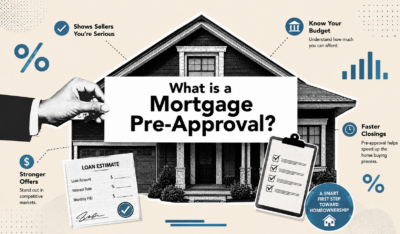
A mortgage pre-approval is an evaluation that a mortgage lender performs to determine how much money you may qualify to borrow for a home purchase.
During this process, the lender reviews detailed information about your finances, including your income, credit history, debts, employment, and available funds. Based on that information, the lender issues a pre-approval letter showing the approximate loan amount you qualify for.
⚠️ Important Distinction: A pre-approval is not the same as final loan approval. The lender still needs to review the specific property, verify additional documents, and complete full underwriting before funding your loan.
Pre-Approval vs. Pre-Qualification
Buyers often hear these terms used interchangeably, but they serve two very different purposes in the buying journey:
| Feature | Pre-Qualification | Pre-Approval |
|---|---|---|
| Evaluation Level | Basic estimate | Detailed, verification-backed evaluation |
| Document Review | Self-reported figures | Tax returns, pay stubs, bank statements |
| Seller Weight | Informal | Strong proof of purchasing capability |
What Does a Lender Look At?
Lenders assess four primary pillars to ensure you can comfortably afford the loan:
1. Credit Profile
Your credit history helps determine your eligibility and interest rates. Perfection isn’t required—different loan programs have different score floors.
2. Income & Work History
Lenders check for reliable, consistent income sources over time to ensure you can cover your monthly obligation.
3. DTI Ratio
Your Debt-to-Income (DTI) ratio measures your current monthly debt payments against your overall gross monthly income.
4. Verified Assets
Reviews of savings, checking, and investment accounts confirm you have down payment funds and closing reserves.
Documents You Will Need
Having your financial paperwork organized ahead of time speeds up the application process significantly. Expect to gather:
- Proof of Income: Recent pay stubs (last 30 days) and W-2 forms (last 2 years).
- Tax Records: Federal tax returns for the past two years (especially vital for self-employed buyers).
- Asset Statements: 2–3 months of bank, retirement, or brokerage statements.
- Identification: Driver’s license or government ID, plus your Social Security number.
Does Pre-Approval Tell You What You Should Spend?
This is a critical distinction: The maximum amount a lender approves you for isn’t automatically the amount you should spend.
Remember the Full Payment Picture: Principal and interest are only part of your monthly bill. Always factor in property taxes, homeowners insurance, HOA fees, utilities, routine maintenance, and local fees like Mello-Roos or land leases.
If a lender says you qualify for $600,000, you may decide that a $500,000 purchase price leaves you with a comfortable lifestyle buffer. Always balance what you qualify for with what feels comfortable monthly.
What NOT to Do After Getting Pre-Approved
Getting pre-approved isn’t the finish line. Your financial profile must stay completely consistent until closing day. Avoid these common mistakes:
🚫 Do Not Make These Financial Moves:
- Open new credit cards or take out auto loans.
- Finance new furniture or household items.
- Make large, untraceable cash deposits into your bank accounts.
- Change jobs or alter your employment structure (e.g., switching to 1099).
Why Pre-Approval Matters in the Coachella Valley
Real estate conditions move at different speeds across the desert. Markets in Palm Springs, Cathedral City, Rancho Mirage, Palm Desert, Indio, La Quinta, Coachella, and Desert Hot Springs each have unique rhythms and inventory speeds.
When a standout property hits the market in any of these neighborhoods, having an active pre-approval letter ready allows us to draft a competitive offer immediately—giving sellers confidence that your offer is rock solid.
Ready to Start Your Home Search?
At the Fredy Rodriguez Real Estate Group, we’re here to help you navigate the Coachella Valley market, connect with trusted local lenders, and build a stress-free buying strategy.